
Imperial College London: The MIT of England
By Lisa Bleich
Imperial College London stands as a world-leading institution dedicated exclusively to STEMB (Science, Technology, Engineering, Medicine, and Business), think the MIT of England. Operating under the mission of “Science for Humanity,” the college focuses on the translation of academic research into tangible products and entrepreneurial ventures. For the student who is certain of their path in the sciences, business or engineering, Imperial offers an environment of unrivaled depth and rigor.
Academics: Depth, Research, and the “I-Explore” Edge
The academic experience at Imperial is defined by immediate specialization and high levels of independence. Most students choose between three-year BSc degrees or four-year integrated masters programs, including ten distinct engineering tracks.
We had a chance to meet professors from the bioengineering department. Professors manage the whole curriculum and make all the material relevant to the students.
- Research-Led Learning: Research is a massive component of the undergraduate journey through programs like UROP and IROP. Second-year bioengineering students participate in a 20-week hands-on lab class focusing on cell cultures and writing research reports suitable for professional publication.
- Curriculum Innovation: While the focus is specialized, the I-Explore initiative provides a unique opportunity for students to take elective classes outside of their primary major to broaden their perspectives.
- New Horizons: The college continues to evolve with its curriculum, recently launching a new major in Economics, Finance, and Data Science.
- Self-Directed Environment: Students are treated as adults; attendance is rarely recorded except for mandatory labs, and all lectures are recorded for independent review. However, international students must attend class to maintain their visas. Be prepared for a relentless pace, as exams often occur immediately after holidays, meaning students “never get a break”.
The Entrepreneurial Ecosystem: The Enterprise Lab
Imperial is a powerhouse for innovation, the Enterprise Lab serves as a central hub, supporting students from the initial spark of an idea through prototyping and into commercialization.
- Student Impact: One in eight students works with the lab, which provides access to a network of 900 interested investors and over 80 world-class mentors.
- Notable Ventures: The lab has birthed successful startups like Jelly Drops (hydrating sweets for dementia patients) and Notpla (biodegradable seaweed packaging).
- Inclusive Innovation: Initiatives like WE Innovate specifically support female entrepreneurs, having helped launch over 60 startups to date.
Student Body: Collaborative, STEM-Inclined, and Global
The community at Imperial is composed of 11,500 undergraduates, representing 150 nationalities. Students describe the vibe as uniquely STEM-focused, using adjectives like nerdy, sporty, collaborative, supportive, and hardworking.
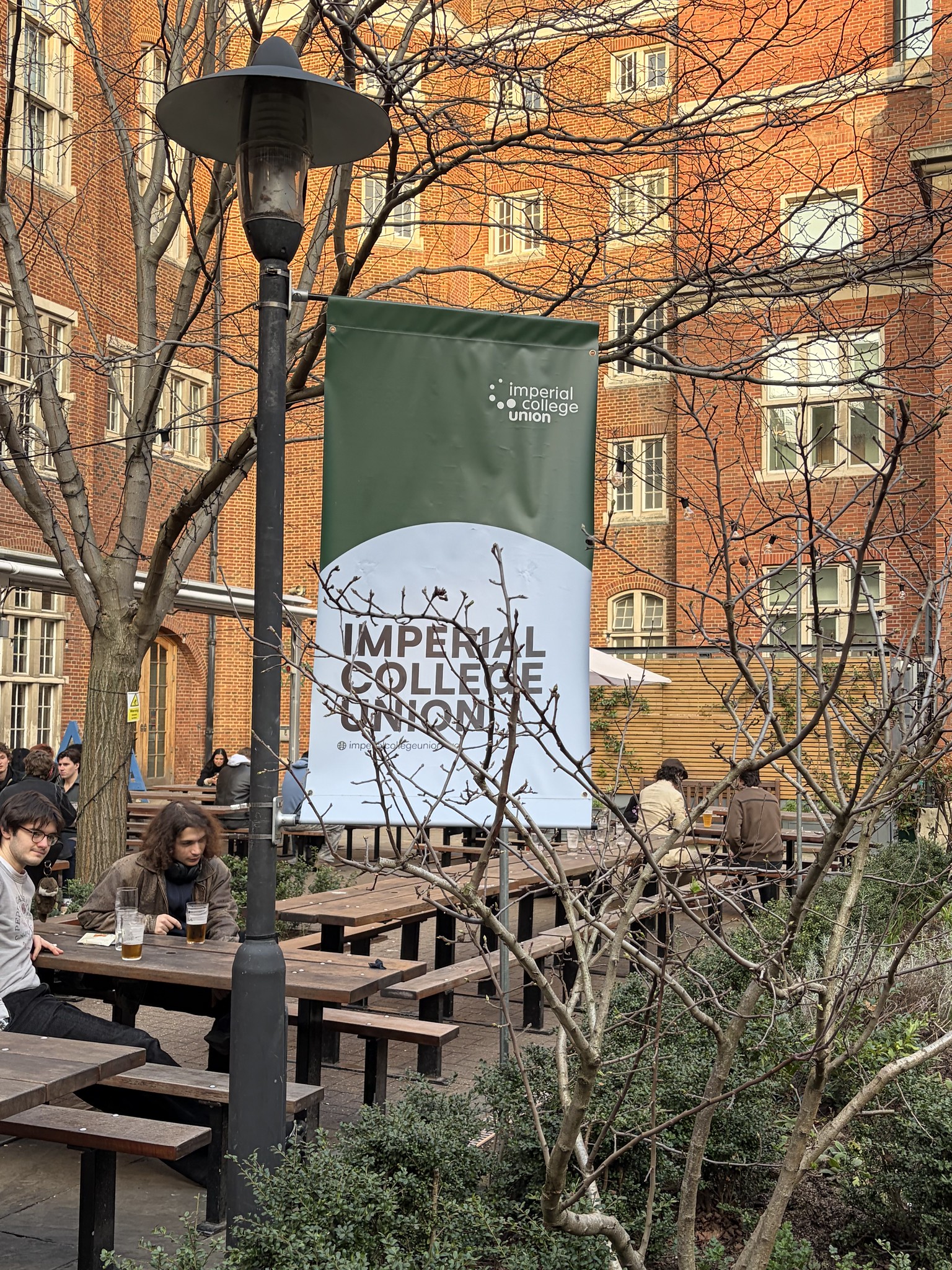
I had the opportunity to watch a student production of The Importance of Being Ernest. The cast and crew was made up of undergraduate and graduate students, and the audience was super supportive. It was a balmy Friday night, and we walked through the outdoor pub where students were enjoying a pint or two. Inside, students were dancing and playing quiz games. Overall they looked happy and were having a blast.
- Social Life: Extracurricular life is vibrant, with 370 different student societies. These range from Imperial Hockey and rock climbing to a non-audition, just-for-fun wind band.
- Traditions: Students often bond through departmental dinners or random social events, such as a Friday black-tie boat party specifically for engineers.
- Living in London: First-year students typically live in Imperial housing, which is generally a 20–30 minute walk from campus. In subsequent years, most move into private flats further away, often with friends.
- Wednesday afternoon sports matches. Consistent with all UK schools, there are no classes on Wednesday afternoons to allow for students to compete in sports.
Surrounding Area: Museum Row and Hyde Park Adjacent
Imperial college is surrounded by museums: The Victoria and Albert is across the street and The National History Museum and The Science Museum are down the block. It’s an easy walk to Hyde Park as well. We loved exploring the restaurants, pubs and shops in the area. Don’t miss Ceru or Brother Marcus for Mediterranean food.
Admissions: A Data-Driven Approach
Admission to Imperial is highly selective and focuses almost entirely on academic potential and subject interest.
- The Numbers: US applicants typically need a minimum of 4-5 AP exams with scores of 5. Specific subjects are mandatory; for example, AP Calculus BC is required for engineering and business degrees.
- The Personal Statement: Admissions tutors look for 85–90% academic focus. This should highlight “super-curricular” activities—such as academic reading, podcasts, research projects, or summer schools—that demonstrate a deep understanding of the chosen subject beyond the standard school curriculum.
- Testing and Interviews: Many majors require subject-specific tests like the ESAT or TMUA. If invited for an interview, it may range from a traditional conversation to a technical assessment conducted by a professor and a student.
Summary
Imperial College London is a match for the brilliant, curious, and self-motivated student who lives and breathes STEMB. It is a place for those who want to be at the center of a global innovation hub and are ready to take full ownership of their academic and professional future.
